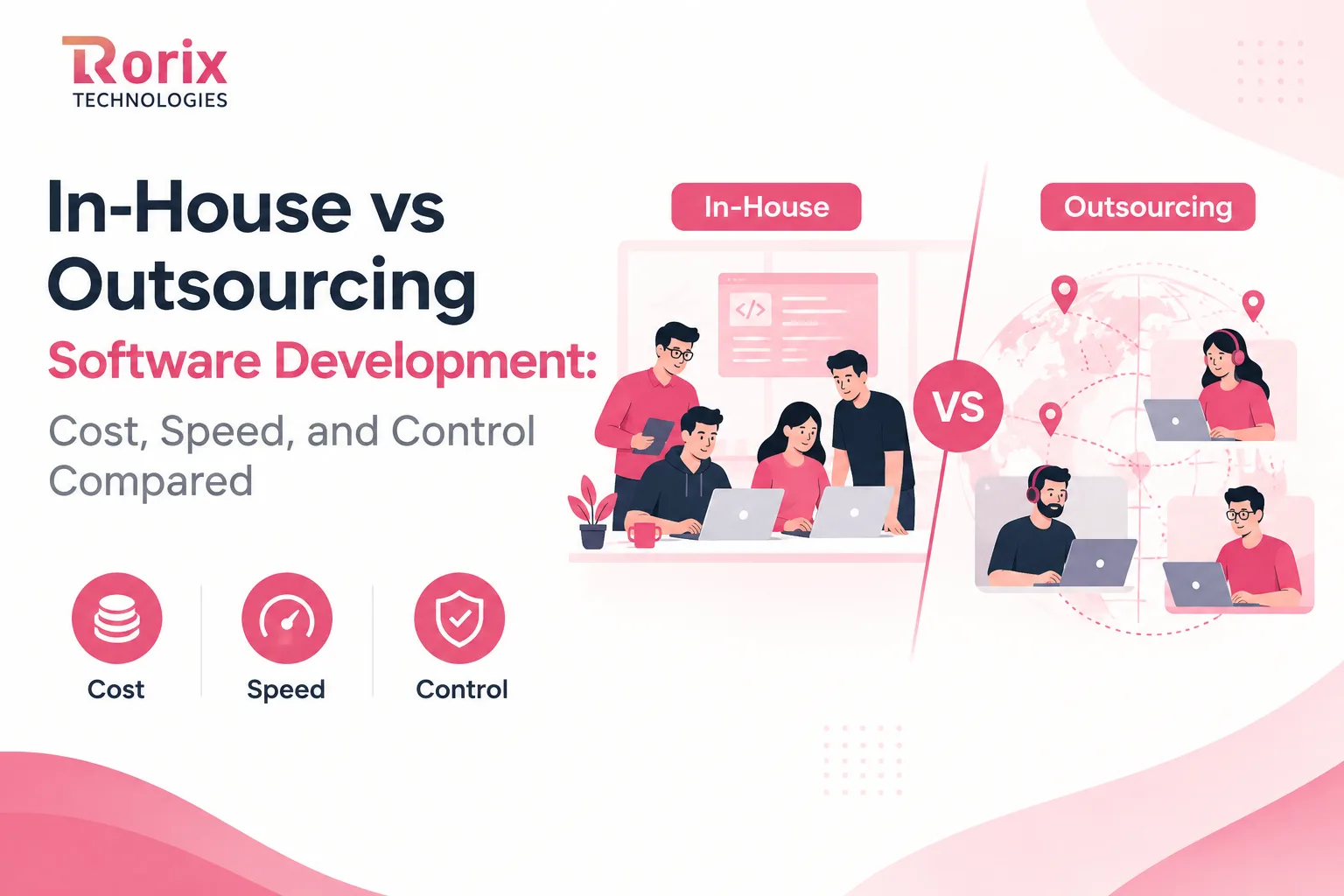
In-House vs Outsourcing Software Development: Cost, Speed, and Control Compared (2026)
Compare in-house vs outsourcing software development on cost, speed, control, risks, and the hybrid model with a practical 2026 decision guide.
Read article
Guides on hiring software engineers, evaluating offshore development companies, and building dedicated product teams without losing delivery speed.
Skip to all 15 articlesEvery engagement model in offshore development answers one question differently: who owns delivery. The guides below define the models, price them honestly, and cover the part most content skips, which is making the team work after the contract is signed.
Staff augmentation puts engineers inside your process; a dedicated team ships outcomes under its own lead. The IT staff augmentation explainer and the guide to dedicated development teams define each model, the staff augmentation vs dedicated team comparison settles which fits your delivery ownership, and the guide to how white-label development works covers the third model, where agencies resell a partner team under their own brand.
Rate comparisons mislead when one side of the comparison is missing overhead. The IT staff augmentation cost guide derives what a US engineer costs from public salary data, the cost of outsourcing guide covers regional ranges, the white-label cost per engineer shows what agencies actually pay, and the nearshore vs offshore comparison prices the time-zone tradeoff.
The roundup of offshore software development companies names the field, and the guide to why companies outsource development clarifies what you should expect the model to deliver. For agencies subcontracting a build, the guide to vetting a white-label development partner lists the questions that expose weak delivery, and the guide on when agencies should subcontract covers the timing call.
Extended teams fail on ambiguity, not distance. The guide to managing an extended development team covers the operating rhythm that keeps a remote team shipping, and the guide to hiring a dedicated development team covers structuring the engagement so ownership is explicit from the first sprint.
Compare in-house vs outsourcing software development on cost, speed, control, risks, and the hybrid model with a practical 2026 decision guide.
Read article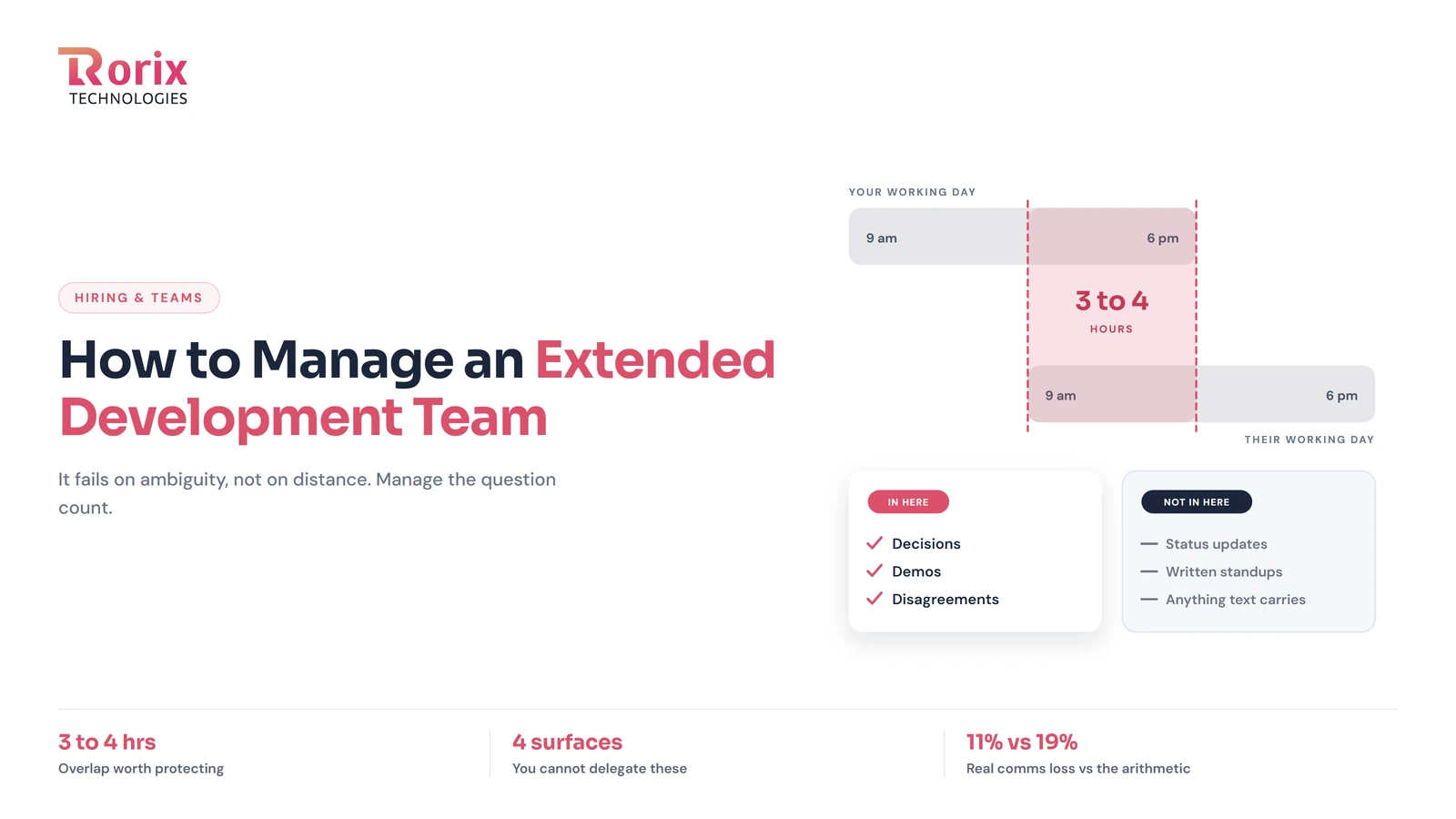
Managing an extended development team is not about more status calls. Here is the ownership, written decisions, and overlap that make a distributed team ship.
Read article
Eight questions that separate a white-label development partner from a subcontractor, what a good answer sounds like, and where the bad answers hide.
Read article
A decision framework for agencies with more pipeline than capacity: five questions that decide whether to subcontract a build, hire for it, or turn it down.
Read article
White label development cost, per engineer and per month: what a partner team runs, what the same seniority bills in the US, and what the rate excludes.
Read article
White label software development explained through the contracts: who signs what, how the money moves, when IP transfers, and who meets your client.
Read article
IT staff augmentation cost in 2026: real hourly rates, the fully loaded math against a US in-house hire, and the six cost lines no rate card shows you.
Read article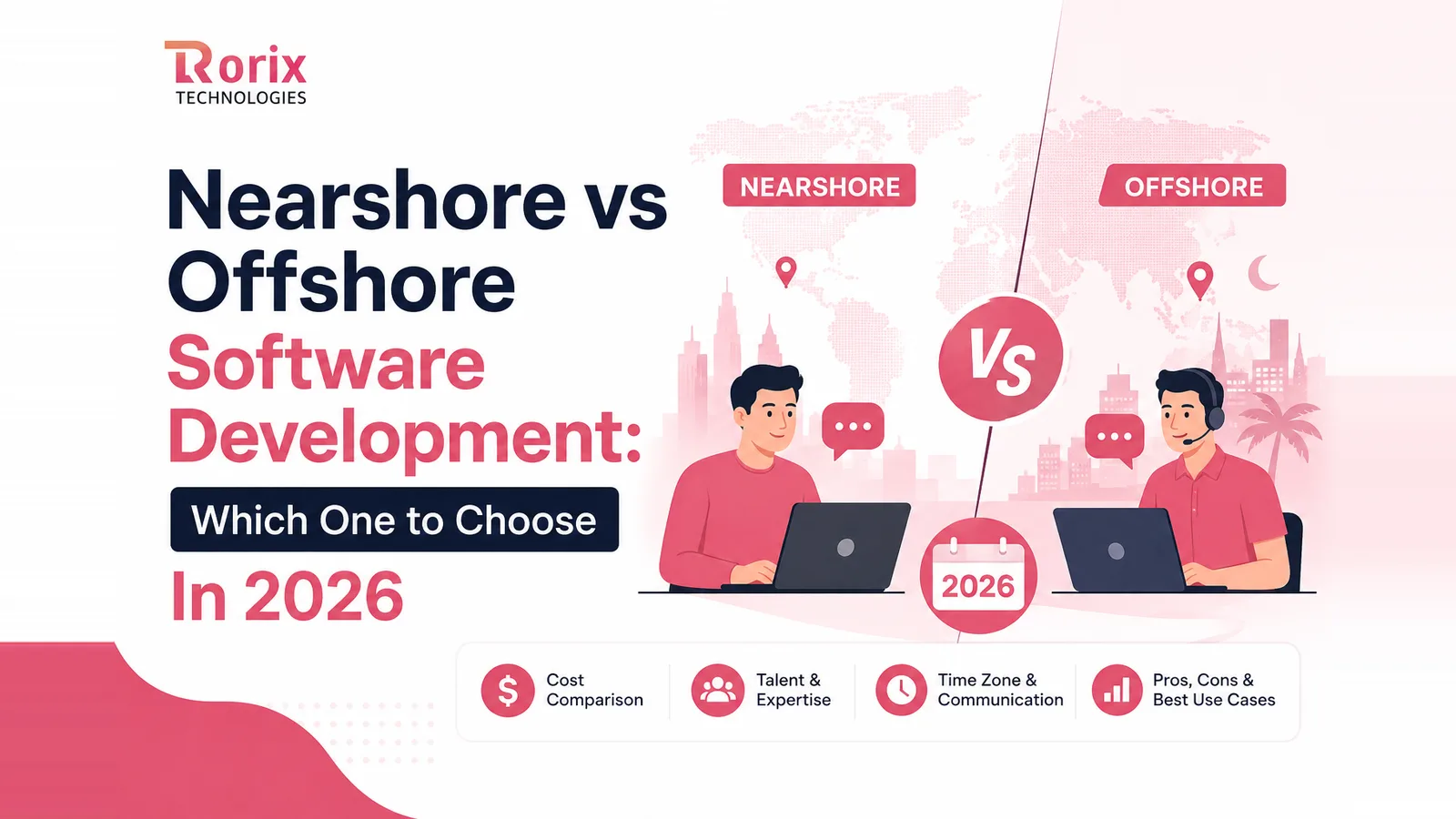
Three vendors quote the same build and the numbers barely overlap. Compare nearshore vs offshore software development on overlap, total cost and risk.
Read article
You added the engineers and delivery still slipped. Compare staff augmentation vs dedicated team on delivery ownership, management load and continuity.
Read article
Three vendors quoted the same build at $45,000, $95,000 and $160,000. See what outsourced software development really costs in 2026, line by line.
Read article
Need senior engineers now, without adding headcount? Here is how IT staff augmentation works, when it beats hiring or outsourcing, and when it does not.
Read article
Compare 25 of the best offshore software development companies in 2026, with regional rates, engagement models, and a practical 7-step guide to picking one.
Read article
Why do companies outsource software development? 10 ROI-driven reasons, the real costs and engagement models, and how to pick the right partner.
Read article
A dedicated development team is a long-term, fully managed group of developers working only on your product. The models, costs, and when to hire one.
Read article
How to hire a dedicated development team that integrates with your workflow and stays long term: vetting steps, retainer models, and red flags to avoid.
Read articleWho owns delivery. Augmented engineers join your standups, your backlog, and your management, so delivery stays yours. A dedicated team ships outcomes under its own lead, so delivery moves to the partner. Price the models only after deciding which ownership arrangement your project needs.
A rate and a salary are different kinds of numbers: a rate is roughly the complete cost of an augmented engineer, while a salary is only about 70 percent of what an employee costs once benefits and overhead land. Converted honestly, a senior US engineer works out to roughly $100 to $150 per hour.
Three reasons dominate: reaching skills the local market cannot supply, standing up a team in weeks rather than quarters, and the cost arithmetic of regions where equivalent seniority bills at a fraction of US rates. The model fails when treated purely as the third.
A partner builds the product while your agency owns the client relationship and the brand on the deliverable. The economics work when the partner's per-engineer cost leaves room for your margin; the risk concentrates in vetting, because their delivery quality ships under your name.
Dedicated developers at $3,500 per developer per month, working your backlog on 2-week sprints with a named technical lead.