WCS vs WMS: Which One Is Right For You In 2026
WCS vs WMS explained: what a warehouse control system actually does, the five differences that change your floor, real cost ranges, and which layer you need.
Read article
WMS implementation guides, vendor comparisons, integration best practices, and warehouse operations articles from engineers who build WMS platforms.
Skip to all 36 articlesThis page organizes the warehouse library by decision rather than by date. Each guide was written by the team that designs and builds WMS platforms, and each section below opens with the question it settles.
Most warehouse software searches begin with a symptom, not a shortlist. The signs you need a warehouse management system covers the symptoms worth acting on, and the core WMS features for mid-market companies defines what a system must actually do. If the confusion is between categories rather than products, the comparisons of ERP vs WMS, WES vs WMS, WMS vs TMS, and inventory management system vs WMS each settle where one system ends and the next begins.
A warehouse management system usually costs between roughly $25,000 in year one for a small cloud deployment and several million for an enterprise rollout. The WMS cost guide explains where any quote falls in that range and itemizes licensing, implementation, and hardware, while the pharma WMS cost guide covers validated environments, and the warehouse automation cost guide prices the equipment and control layers above the software, from basic scanning to robotics, with the hidden costs and payback each tier carries. To turn cost into a decision, the WMS ROI guide walks through the payback math, or get a first estimate in minutes with the WMS ROI calculator. After go-live, the warehouse KPIs and reporting guide covers the numbers that prove the return kept arriving.
Selection fails more often on process than on product. The guide to choosing a warehouse management system sets the evaluation criteria, the WMS vendor selection guide turns them into a scored shortlist, the WMS requirements template provides the document those scores run on, and the cloud vs on-premise comparison settles the deployment question that shapes every quote. If a custom build is on the table, the build vs buy decision framework gives the structure, the guide to building a custom warehouse management system covers the path from floor mapping to phased go-live, the guide to evaluating a warehouse management software development company shows how to vet a builder, and the custom WMS vs off-the-shelf WMS comparison settles whether to build at all.
Most WMS projects that fail do so after the contract is signed. The WMS implementation checklist sequences the rollout phase by phase, and the implementation mistakes guide catalogs the failures that show up most often, and the training and adoption guide covers winning the floor, which is where those failures start. Connecting the new system is its own discipline: the WMS integration best practices guide covers ERP, carrier, and e-commerce connections, and the legacy WMS migration guide covers moving off a system the business still depends on.
Requirements diverge sharply by what the warehouse holds. Cold storage adds temperature zones and compliance logging, pharma adds lot-level traceability and validation, food warehousing adds FEFO rotation, catch weight, and allergen segregation, e-commerce warehousing adds single-unit picking at high order volume, and 3PL warehousing adds client segregation and billing capture on top of everything else. The industry-specific WMS guide maps the differences across sectors, and the supply chain software guide places the WMS in the larger stack it belongs to. Whatever the vertical, the daily work runs on the same five patterns: the warehouse picking methods guide covers choosing among them by order profile.
For technical evaluators, the architecture series shows the decisions under the interface: event sourcing for a full movement history, WebSocket architecture for real-time inventory, barcode and RFID scanning in React, message queues for ERP integration, and zero-downtime deployment on AWS. The comparison of PostgreSQL vs MongoDB for WMS settles the storage question, and the guide to AI in warehouse management separates shipping capability from vendor noise.
WCS vs WMS explained: what a warehouse control system actually does, the five differences that change your floor, real cost ranges, and which layer you need.
Read article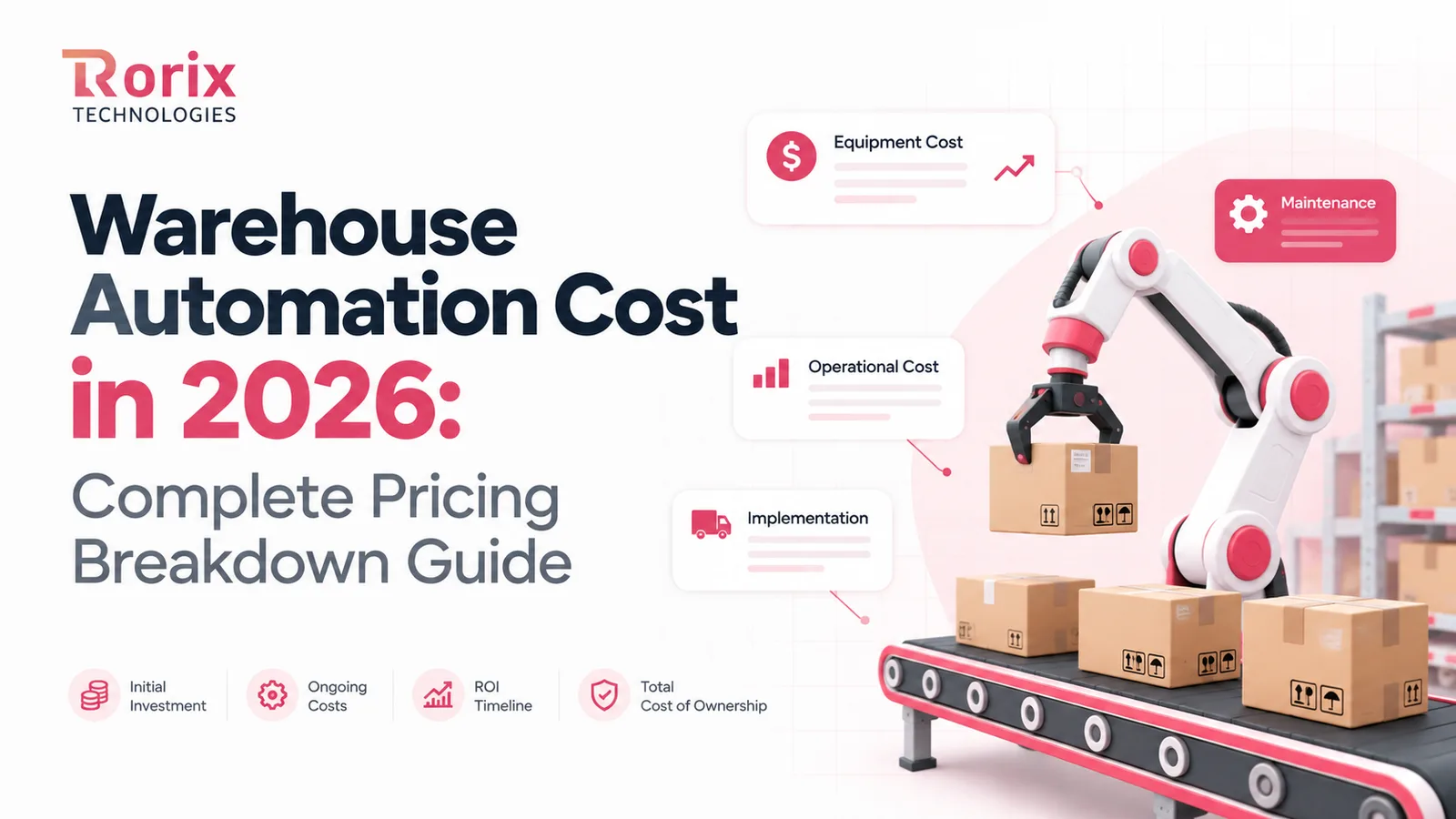
Learn how much warehouse automation costs, from basic scanning to advanced robotics. Explore pricing, software, integration, hidden costs, ROI, and TCO.
Read article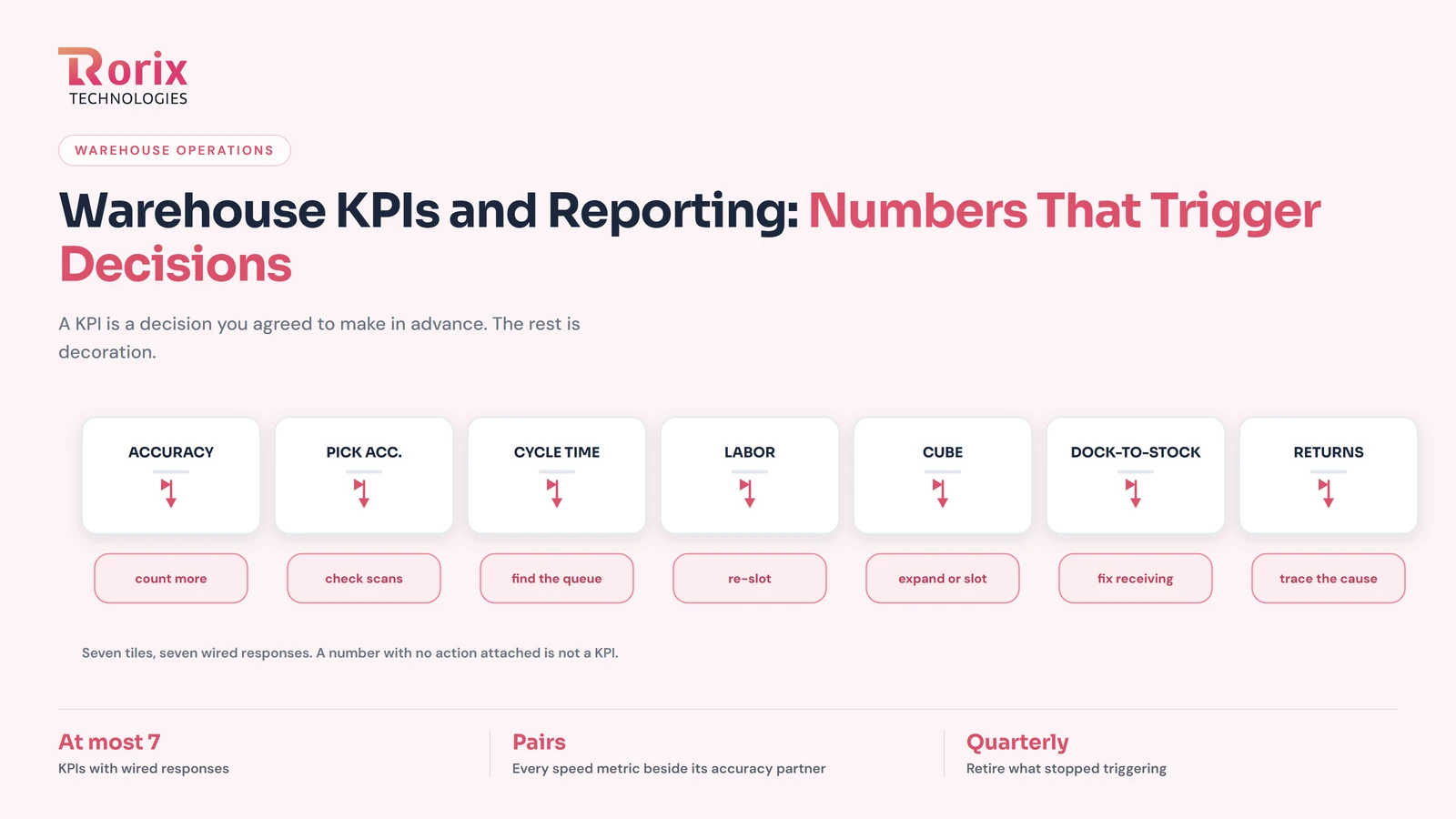
Warehouse KPIs that earn their place: the decision each metric triggers, the formulas, the measurement traps, and the reporting cadence that makes numbers act.
Read article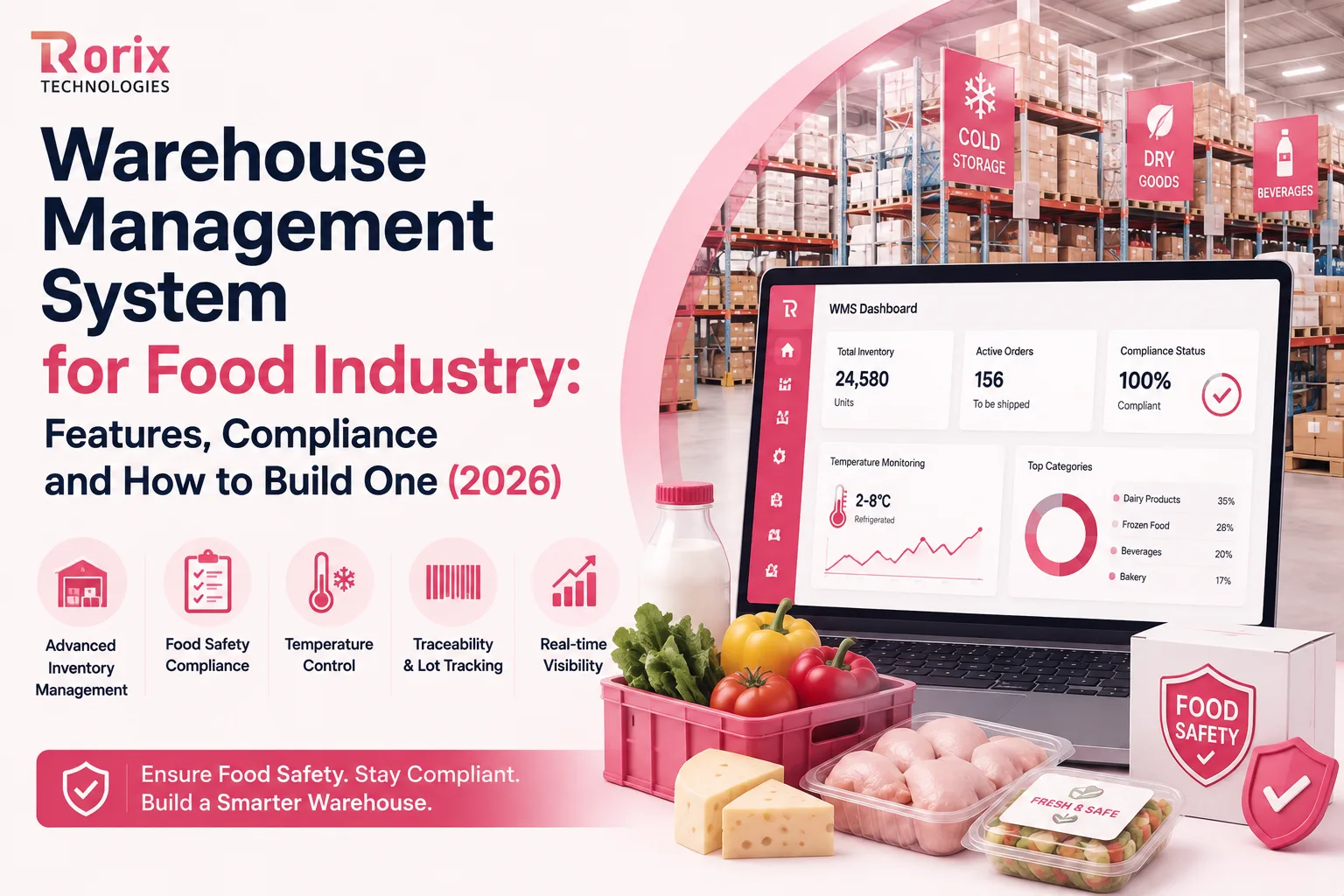
Learn how to choose or build a warehouse management system for food industry operations, including features, integrations, costs, and compliance.
Read article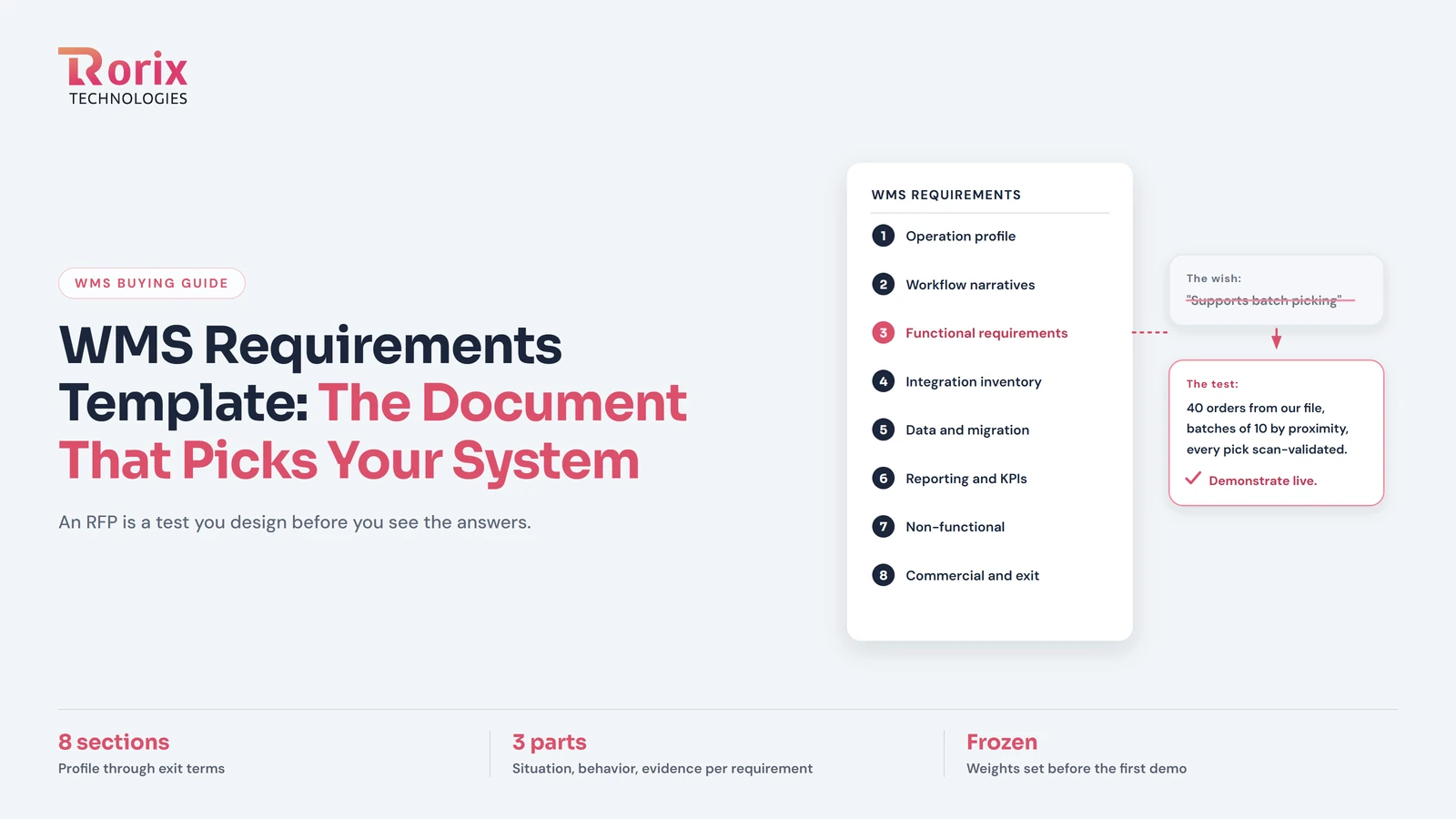
A WMS requirements template that works like a test: the 8 sections to include, how to write requirements vendors can demo, and the scoring that follows.
Read article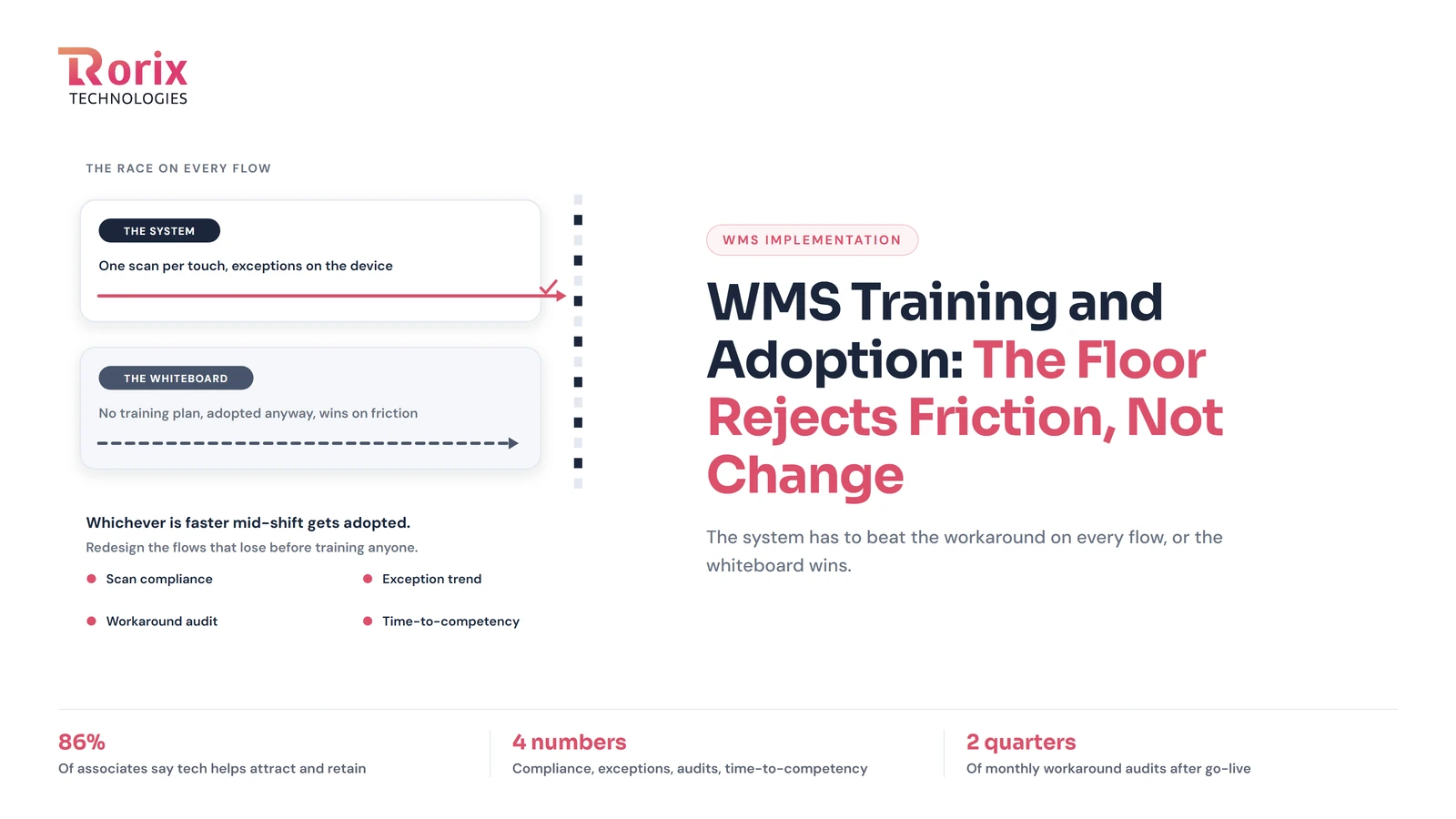
WMS training and user adoption: why floors reject systems, the design choices that prevent it, and how to measure adoption with scan compliance, not surveys.
Read article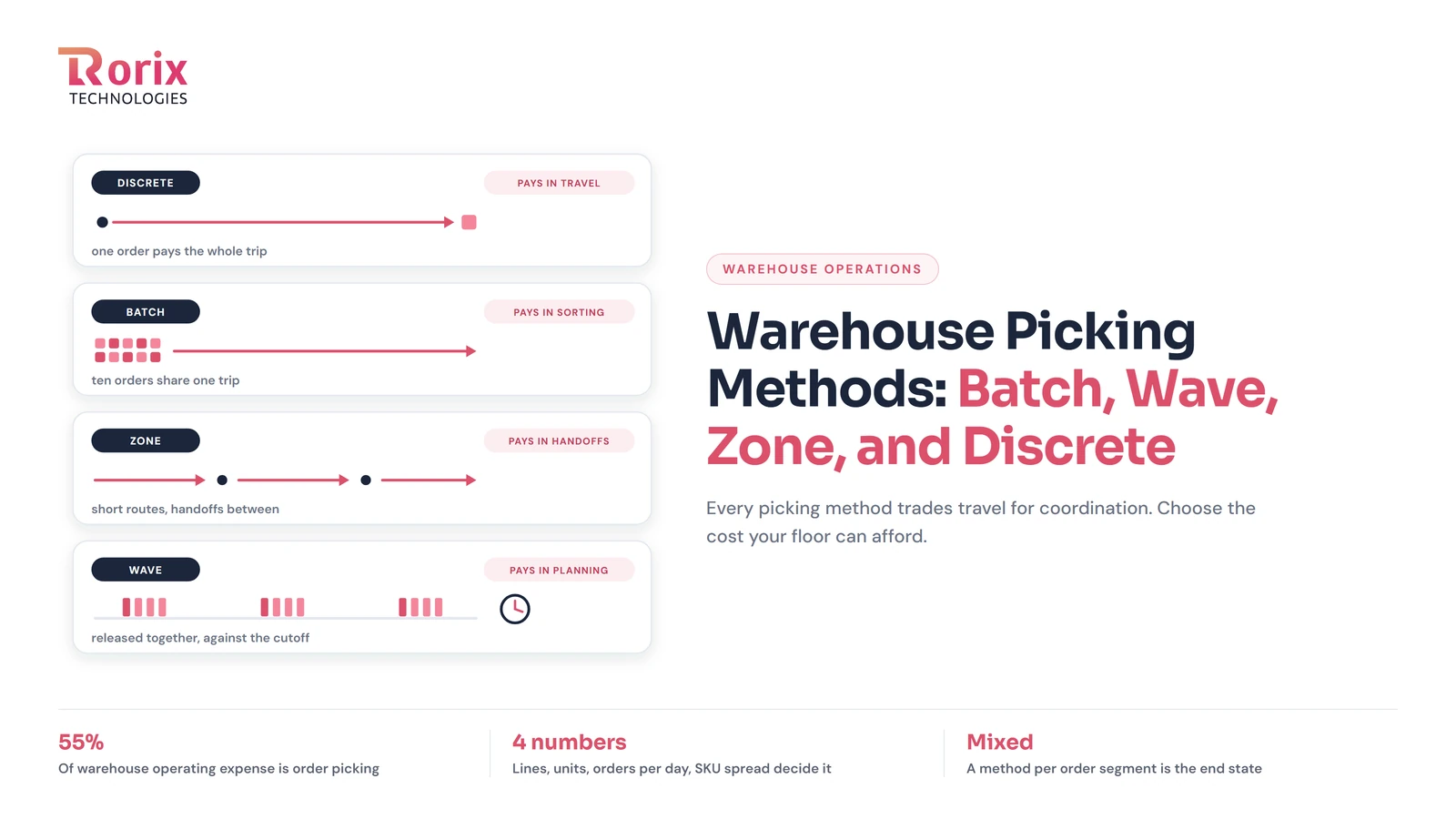
Warehouse picking methods compared: discrete, batch, zone, wave, and cluster, what each trades for shorter travel, and how to choose by order profile.
Read article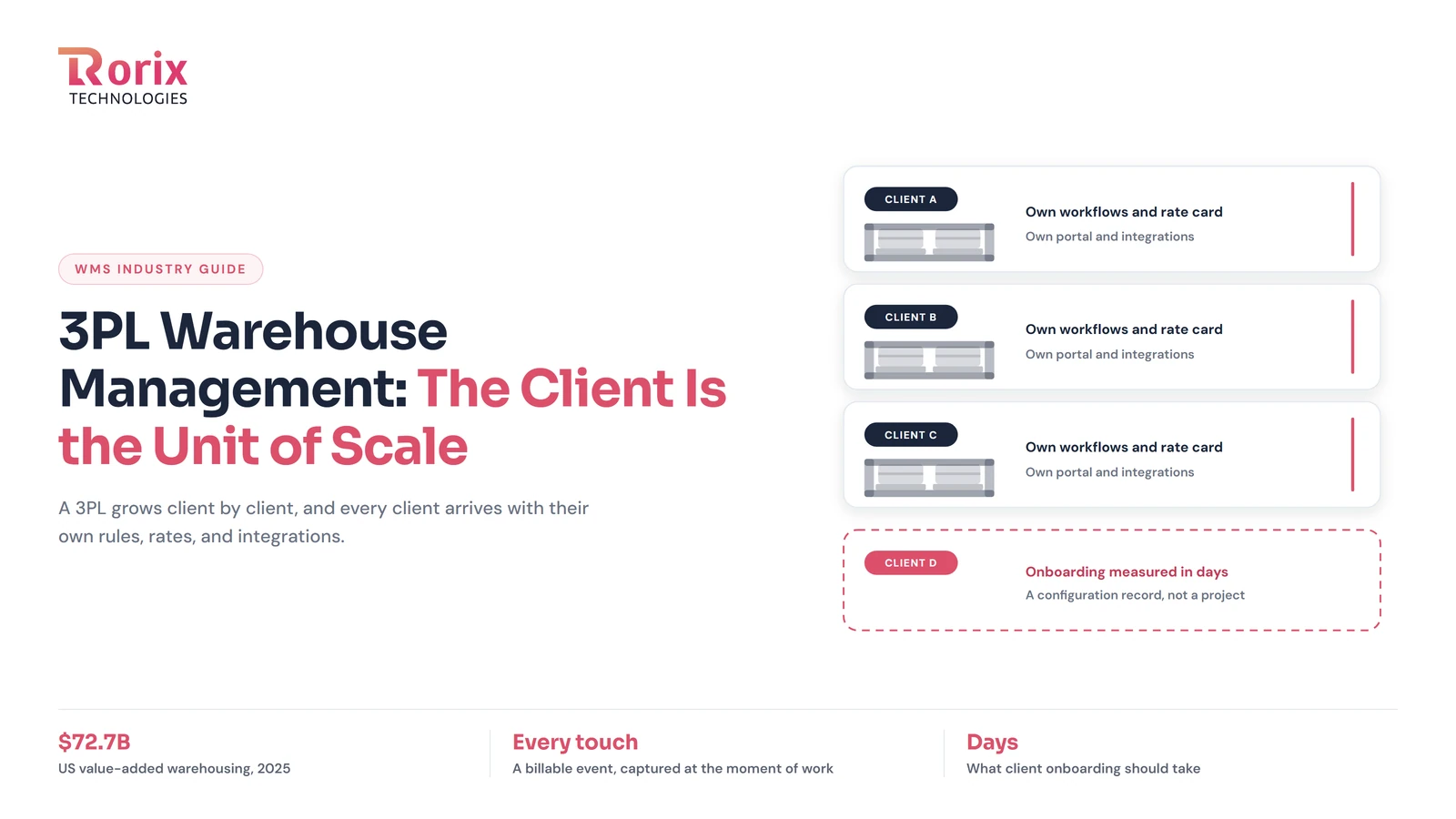
What a 3PL warehouse management system must do that standard WMS software cannot: hard client segregation, automatic billing capture, and onboarding in days.
Read article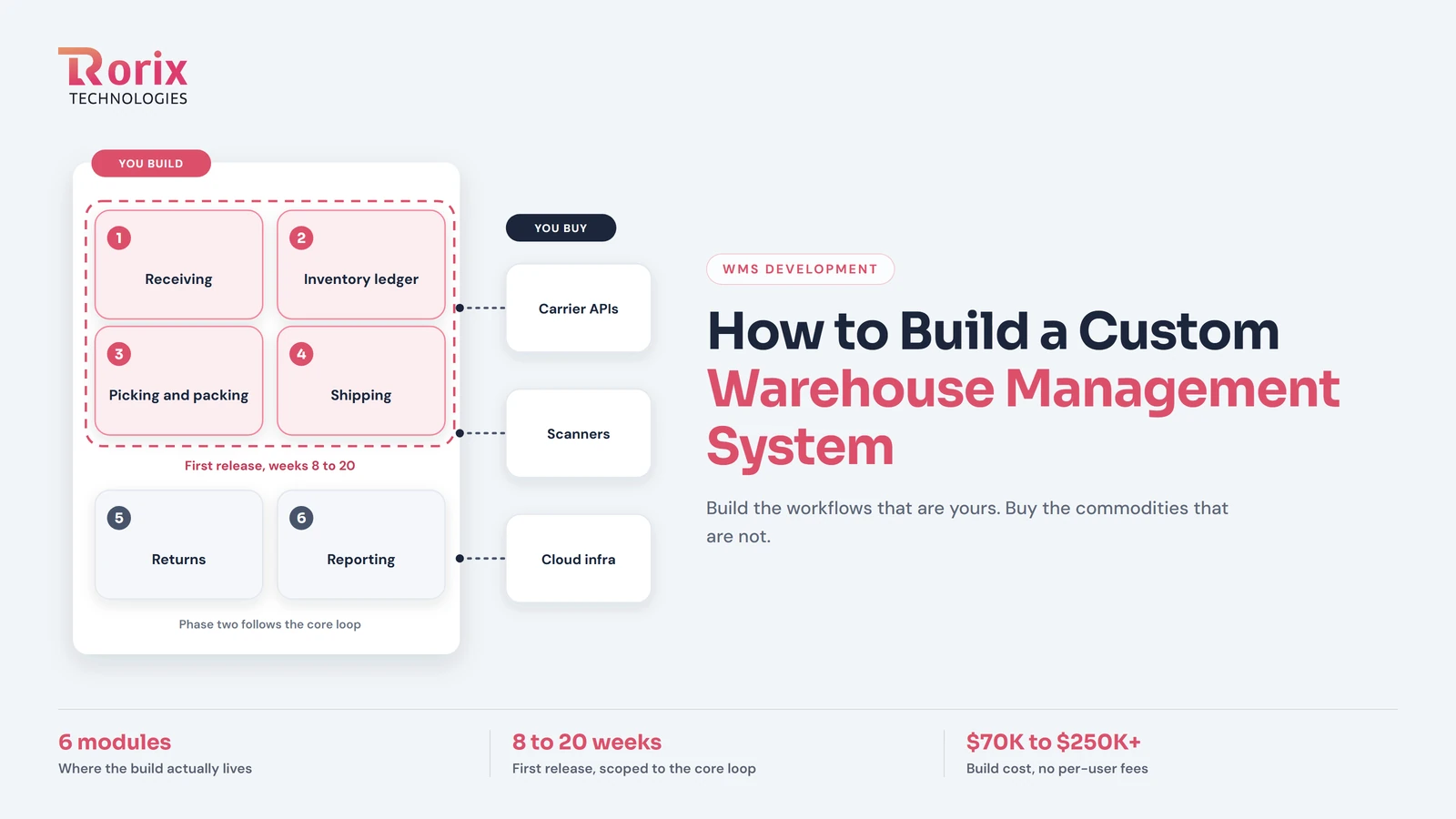
How to build a custom warehouse management system: the six modules you actually build, what you buy instead, an 8 to 20 week phased plan, and 2026 costs.
Read article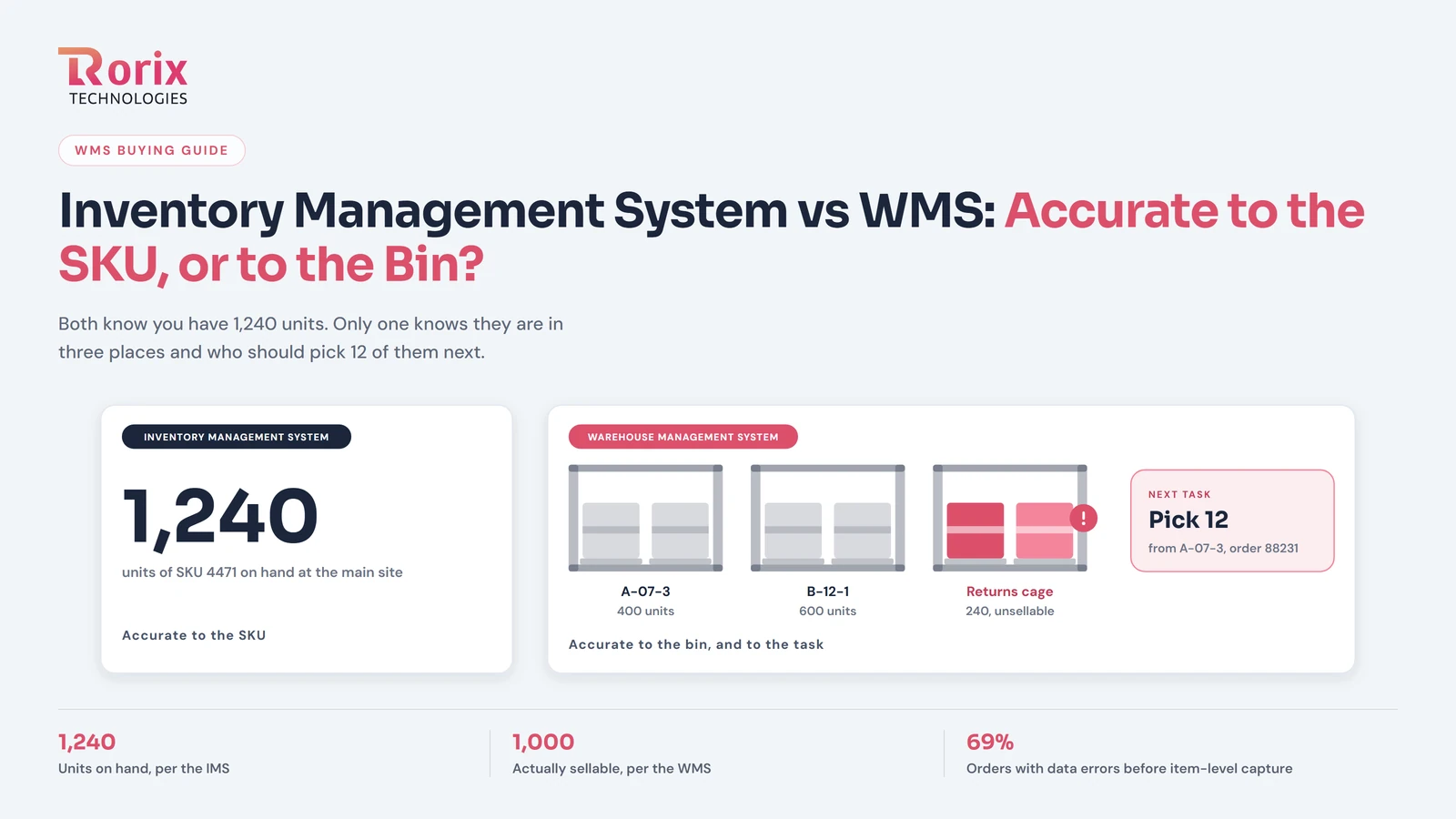
Inventory management system vs WMS: an IMS knows how many you have by SKU, a WMS knows where each unit sits and who picks it next. How to tell which you need.
Read article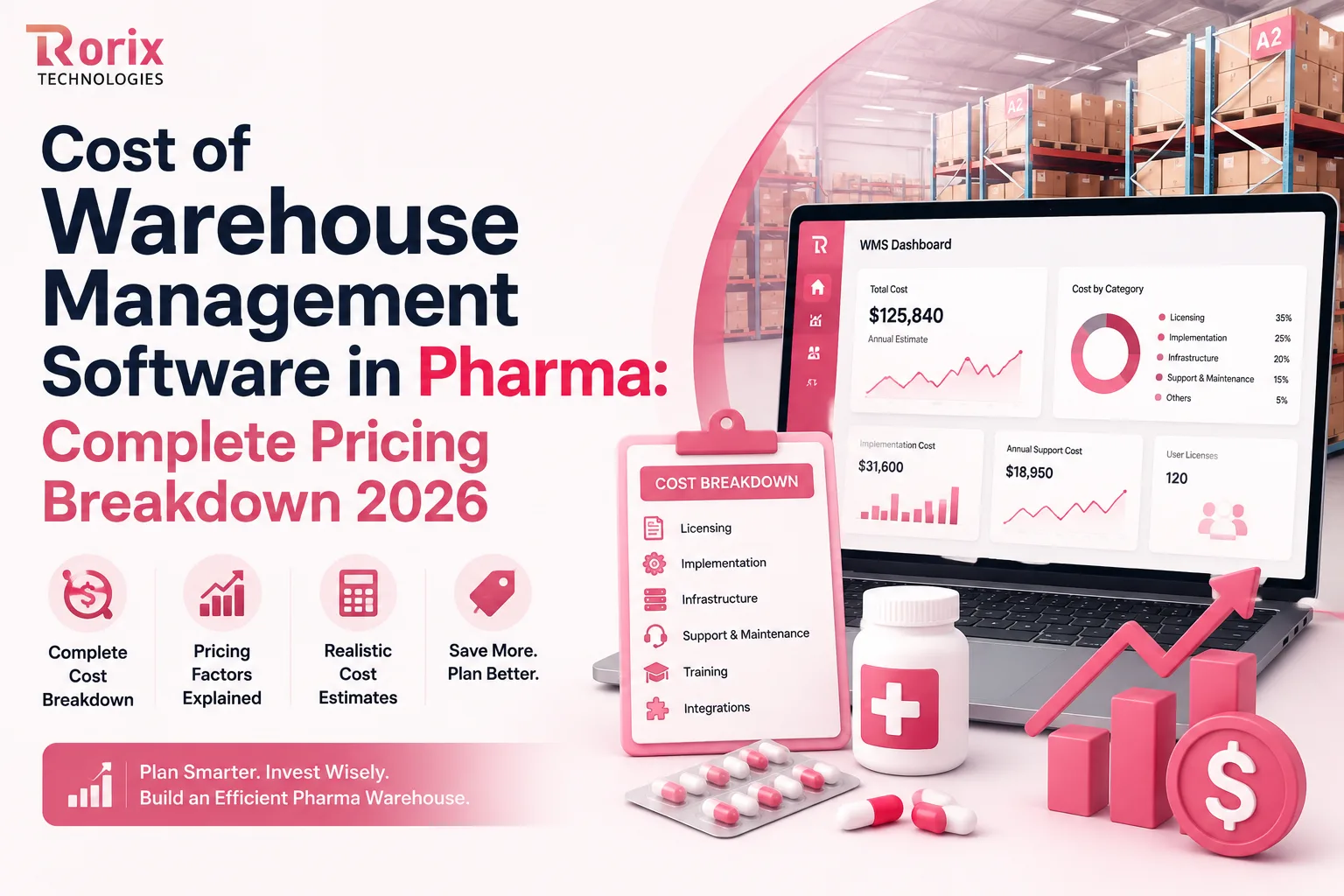
What does a pharma WMS really cost? Year-one bands by operator profile, what validation and DSCSA add, and the three-year total hiding behind the quote.
Read article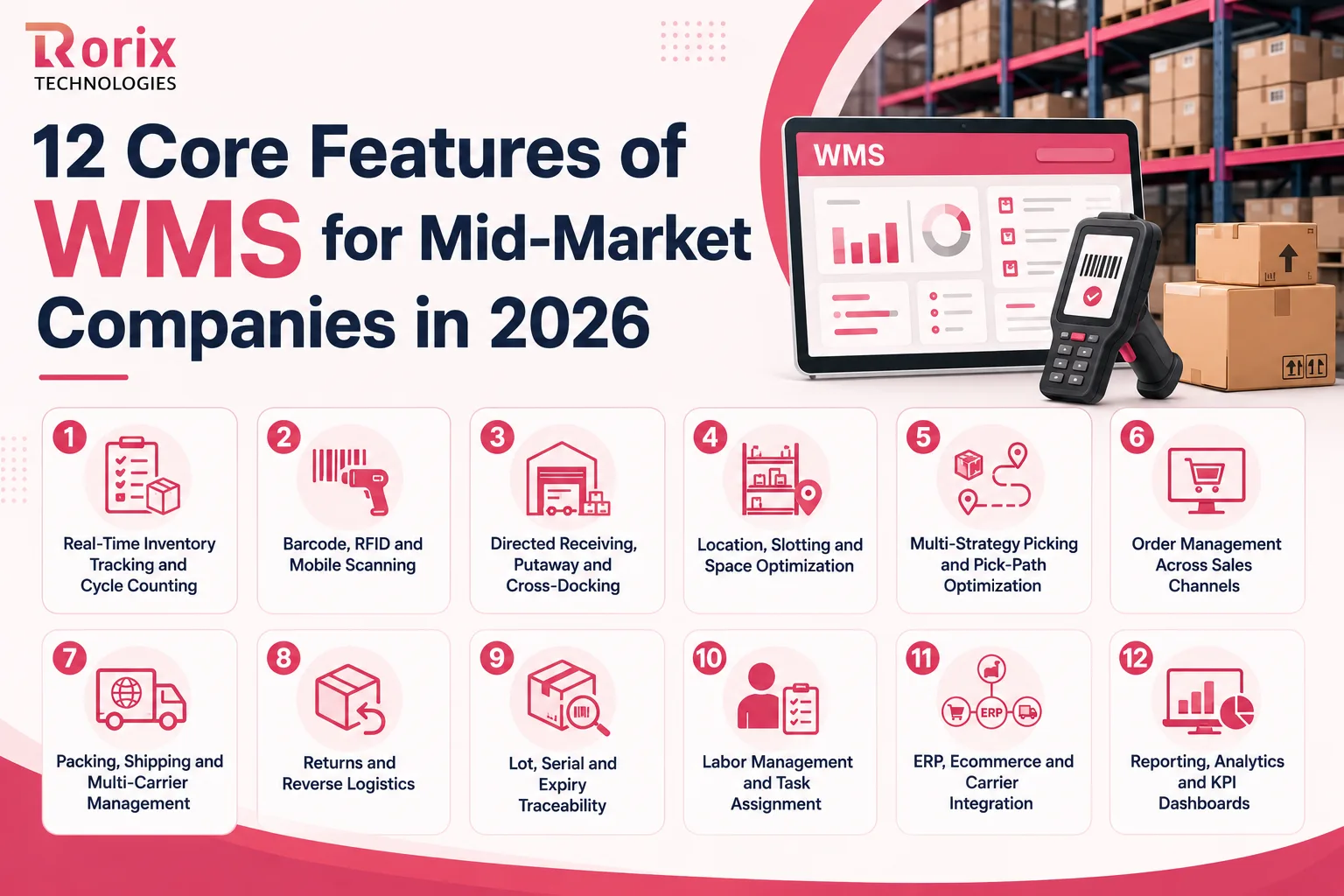
Which WMS features does a mid-market warehouse need first? Compare all 12, see which seven belong on day one, and how to test each one in a demo.
Read article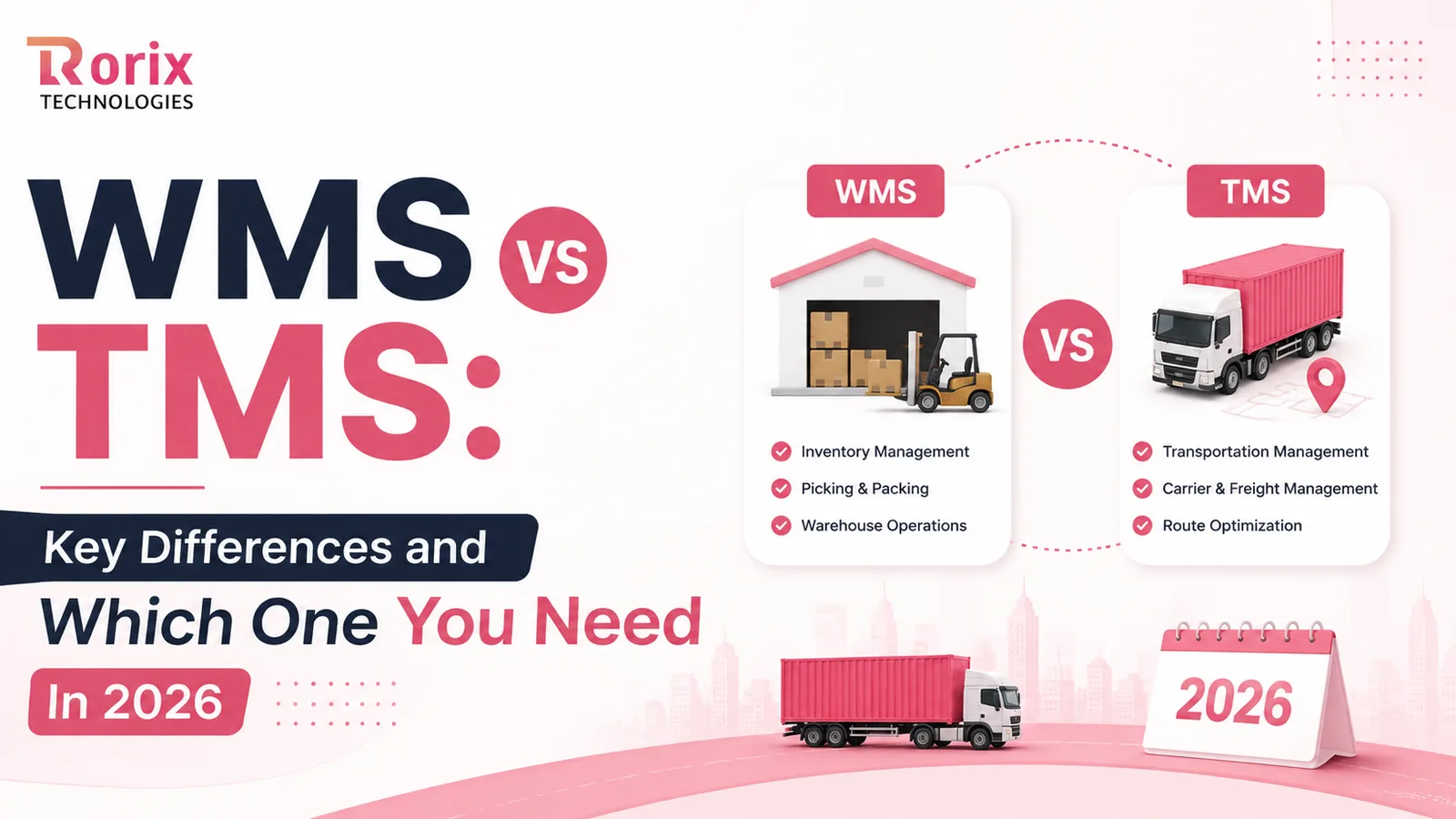
Confused about WMS vs TMS? Learn how they differ, how they work together, which one to roll out first, and how to choose the right system in 2026.
Read article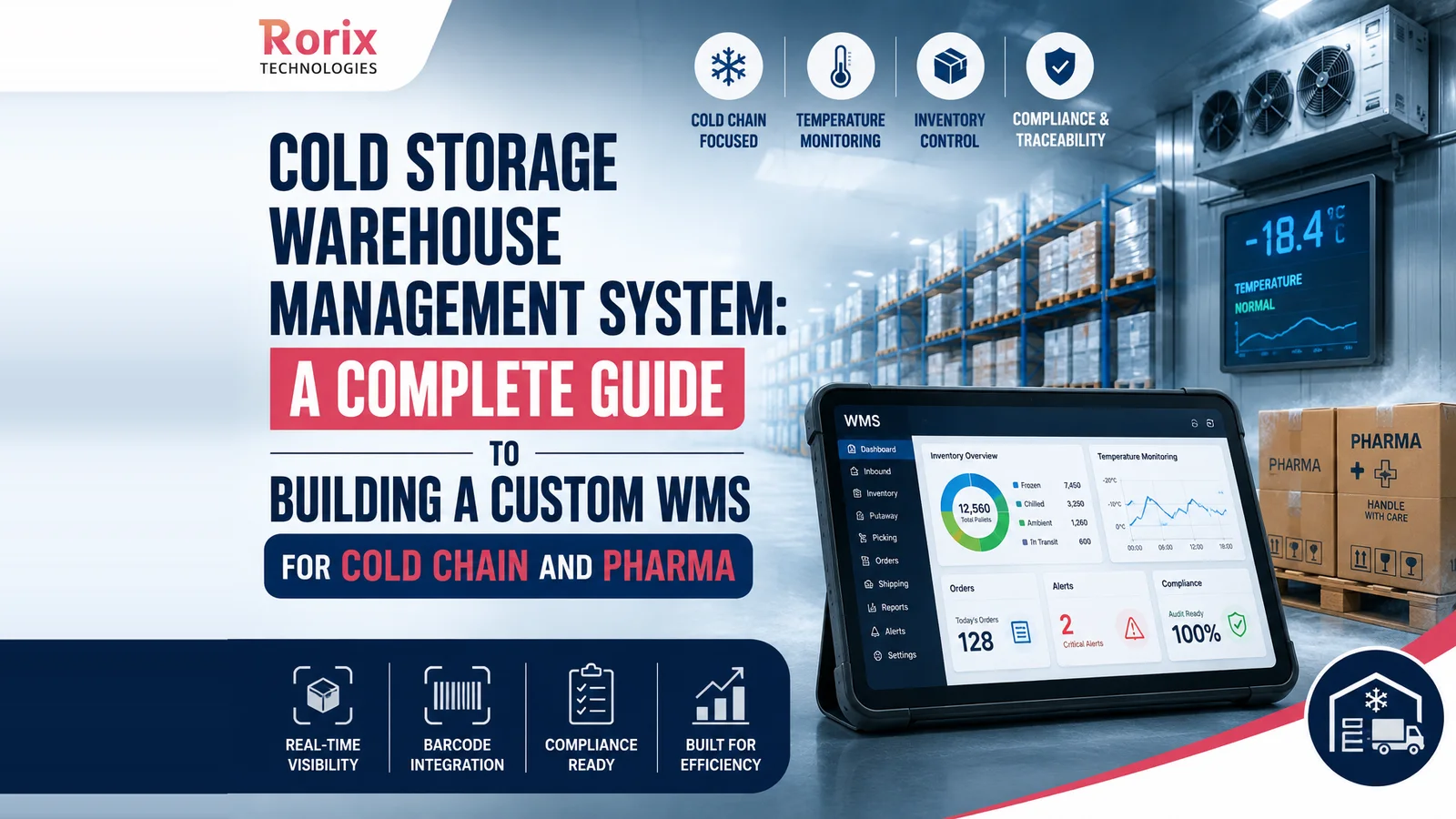
Spoilage you cannot explain, audits you dread, FEFO nobody enforces? Here is what a cold storage WMS has to do, and what building one actually takes.
Read article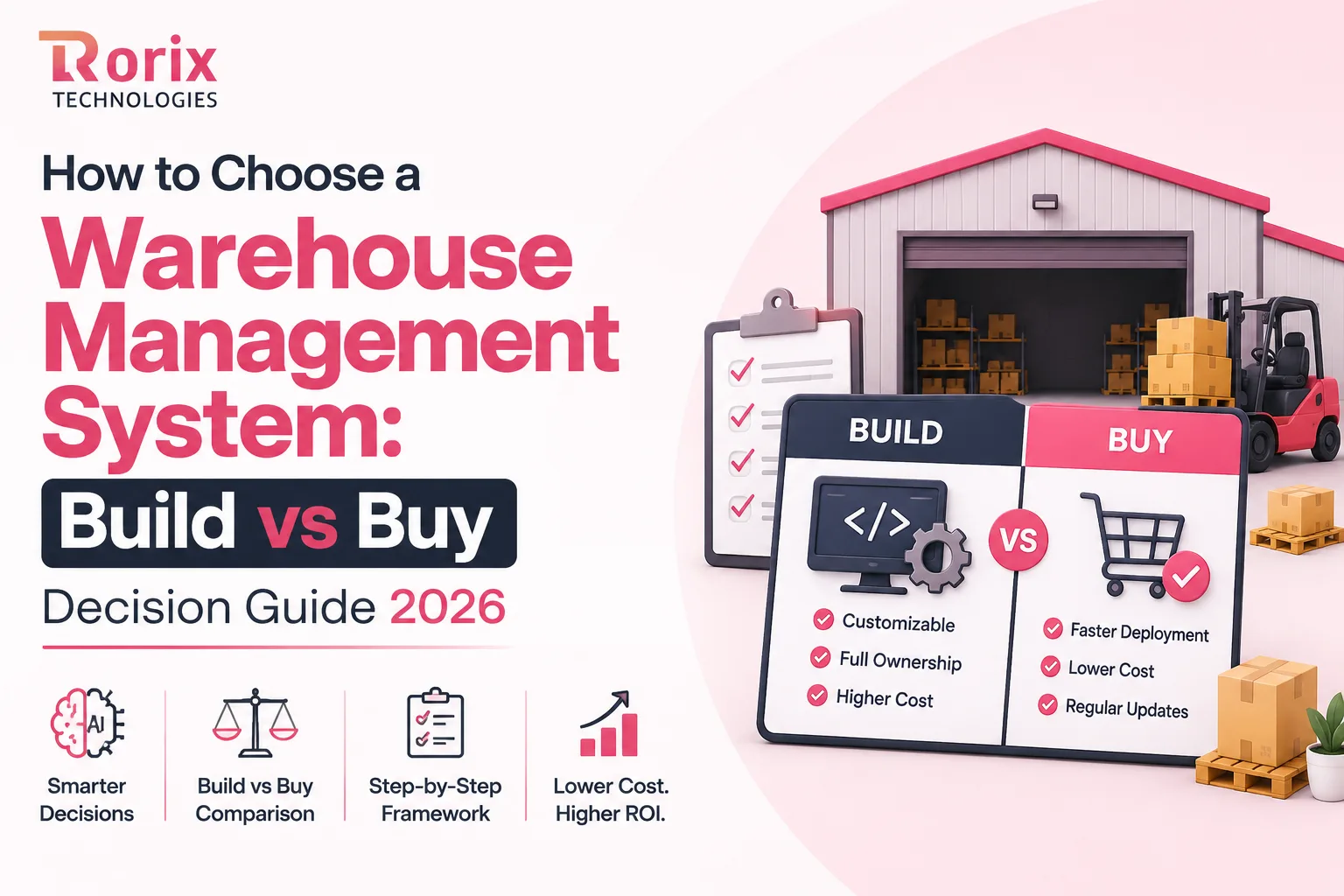
Learn how to choose a warehouse management system with our build vs buy guide, cost comparison, decision framework, and expert selection tips.
Read article
AI in warehouse management explained: 8 proven use cases, the payback signal for each, a readiness checklist, and how to start without a science project.
Read article
Evaluate a warehouse management software development company with a checklist, cost bands, red flags, and 12 builders compared, from a team that ships WMS.
Read article
WMS software for ecommerce: the must-have features, the integrations that matter, and how to build a right-fit system for your store as it scales.
Read article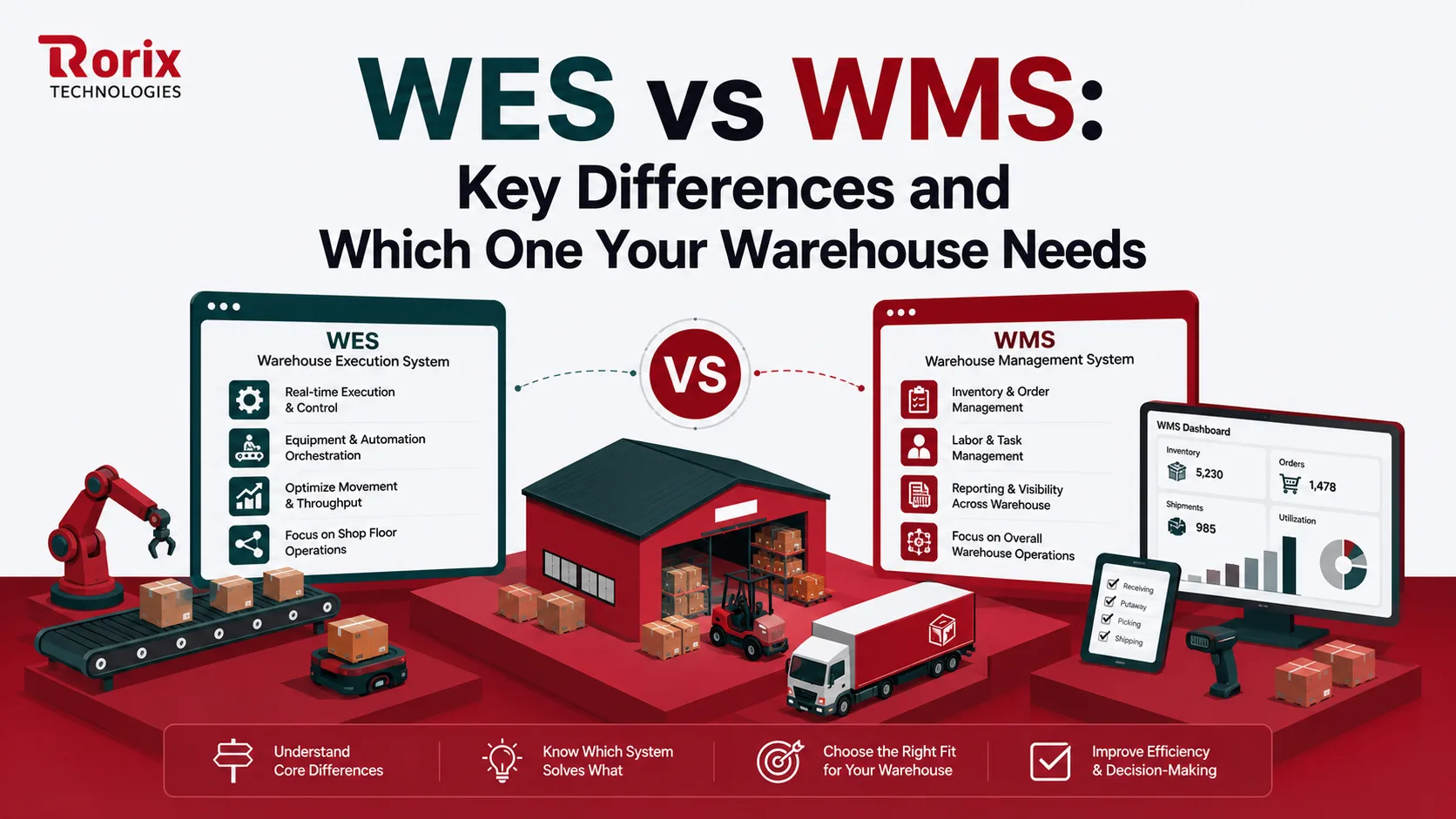
Confused about WES vs WMS? The key differences, when each system fits, how they work together, and how to choose the right one for your warehouse.
Read article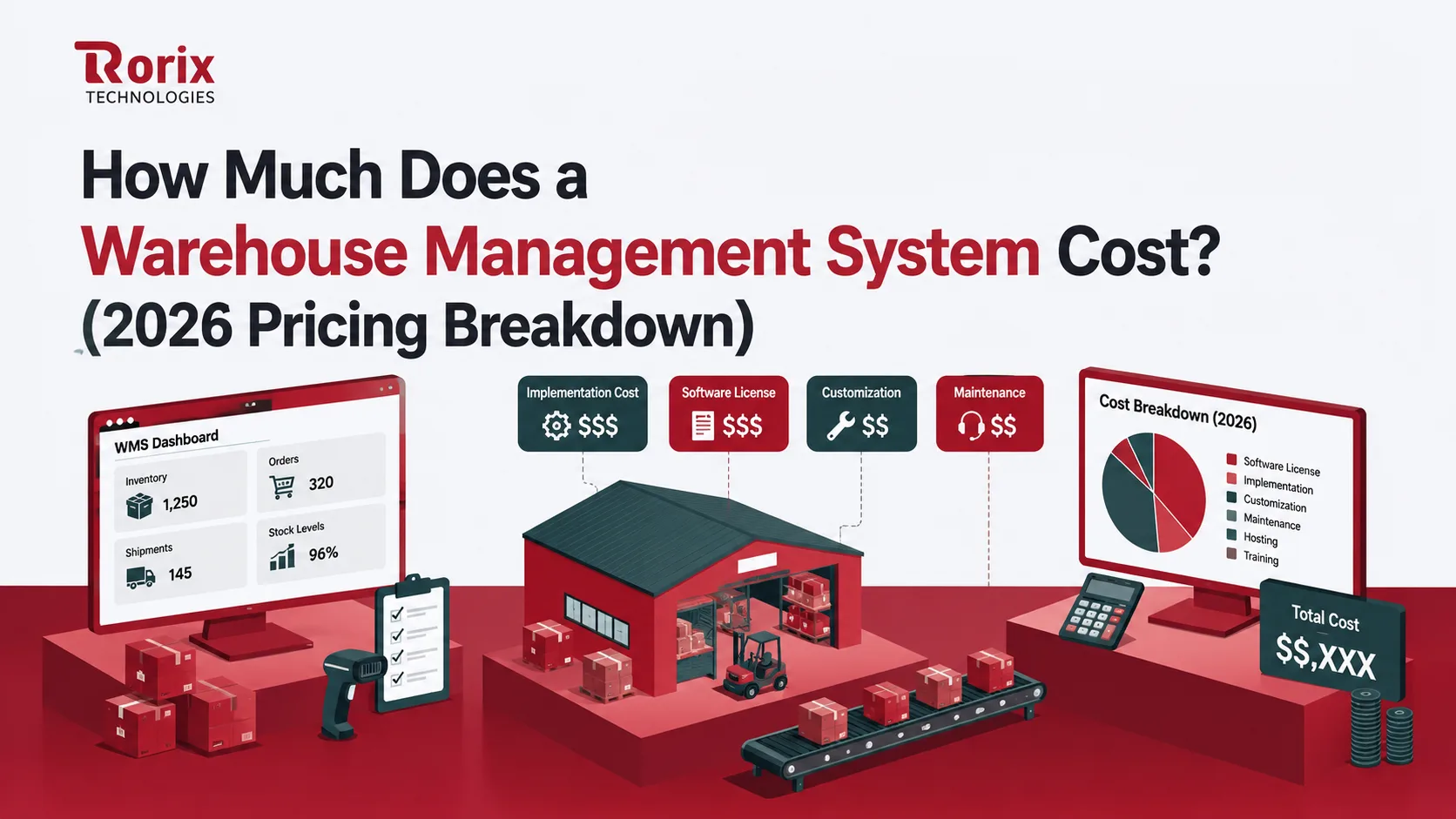
How much does a warehouse management system cost? WMS pricing by deployment, size and features, with five-year TCO tables and vendor rates compared.
Read article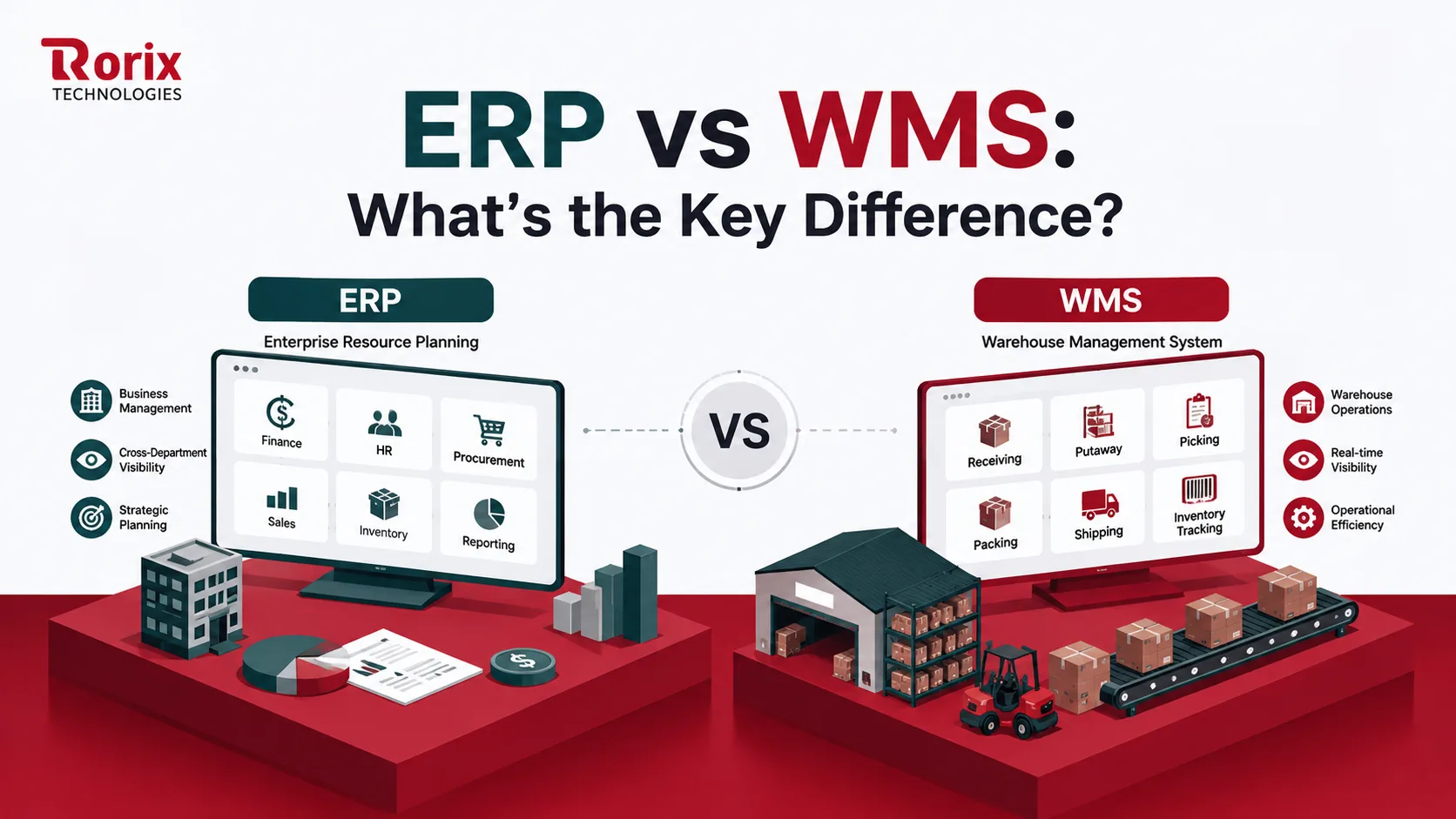
Confused about ERP vs WMS? Discover the real differences, when to use each, how they integrate, what each costs, and whether your operation needs both systems.
Read article
A practical guide to integrating barcode scanners and RFID readers with a React warehouse app: the four real connection patterns and when to use each.
Read article
When to connect a WMS to an ERP over REST and when a message queue wins: the trade-offs, failure modes, and a pragmatic hybrid from a team that ships both.
Read article
How event sourcing gives a warehouse management system a tamper-evident audit trail, when it is worth the cost, and how to get most of the benefit without it.
Read article
How to build real-time inventory tracking with WebSockets and pub-sub, the patterns that keep stock counts live across warehouses, and the pitfalls to avoid.
Read article
How to deploy warehouse software updates on AWS without downtime: blue-green, rolling, and canary patterns, plus safe database migration discipline.
Read article
Supply chain software development for distributors and manufacturers: what to build, when to buy instead, and how to evaluate a development partner.
Read article
Inventory counts that never match, missed orders, overtime creep: 10 clear signs your warehouse has outgrown spreadsheets and needs a real WMS.
Read article
Cloud or on-premise WMS? Compare costs, security, scalability, and control to pick the right warehouse system deployment model for your operation in 2026.
Read article
Learn how to calculate warehouse management system (WMS) ROI with our step-by-step guide. Includes formulas, real examples, and a free ROI calculator tool.
Read article
WMS requirements differ by industry. What e-commerce, 3PL, manufacturing, food and beverage, and pharma operations each need from a warehouse system.
Read article
How to migrate from a legacy WMS without disrupting operations: migration strategy, data conversion, risk mitigation, and zero-downtime cutover techniques.
Read article
Complete WMS implementation checklist with 50 actionable steps, timeline templates, and best practices. Ensure your warehouse management system launch succeeds.
Read article
Discover the most common mistakes companies make in WMS implementations and proven strategies to avoid costly delays, budget overruns, and failed go-lives.
Read article
WMS integration best practices for connecting ERP, e-commerce, shipping carriers, and TMS: proven patterns, sync strategies, and common failure points.
Read article
How to select the right WMS vendor: an evaluation scorecard, RFP template, reference check questions, and contract negotiation tips for 2026.
Read articleMost deployments land between roughly $25,000 in year one for a small cloud setup and several million dollars for an enterprise rollout. The spread comes from deployment model, warehouse complexity, integrations, and licensing structure. Implementation, hardware, and training add significantly to the software price, so budget the project, not the license.
An ERP tracks inventory as a financial record: what you own and what it is worth. A WMS directs the physical work: where stock sits, who picks it next, and in what sequence. Companies add a WMS when bin-level accuracy and directed picking matter more than accounting-level counts.
When your workflows diverge from what packaged vendors assume, when per-user licensing at your headcount overtakes the cost of owning the system, or when deep integration with your existing stack drives the value. Off-the-shelf wins on speed into a standard warehouse; custom wins when the warehouse is the differentiator.
Symptoms matter more than square footage. Rising mispicks, overselling across channels, slow cycle counts, and dependence on one person who knows where everything sits all signal that the spreadsheet stage is over, whatever the size of the building.
Yes, and most mid-market companies do exactly that. The WMS runs execution on the floor while the ERP remains the financial system of record, with an integration layer syncing orders, receipts, and adjustments between them in near real time.
Send us your SKU count and daily order volume. You get back a scope and a number you can take to your CFO.